The Middle East—and more specifically the United Arab Emirates, Saudi Arabia, Qatar, and the Sultanate of Oman—is gradually emerging as a region driving this transition forward. What is at stake here is not merely the adoption of technology. It involves the methodical implementation of structural components that will enable advanced air mobility and drone technology to evolve from abstract innovations to integrated systems, embedded within public policies on transportation, security, energy, and economic development.
This momentum is driven by a convergence rarely seen elsewhere: coordination among transportation ministries, direct involvement of civil aviation authorities, the pivotal role of major airports, targeted industrial partnerships, the emergence of specialised infrastructure operators, and the proactive development of dedicated infrastructure, including vertiports, air corridors, and control centers.
For Quebec, whose aerospace ecosystem has historically been one of the most dense in the world, observing these trends is not merely a matter of curiosity. It serves as a strategic indicator of how the next generation of aviation is taking shape.
United Arab Emirates: the first truly structured AAM system
The United Arab Emirates is now one of the world’s most advanced environments in terms of the practical development of advanced air mobility and drone technology. The country recognised early on that the challenge was not merely technological, but organisational: creating the operational conditions even before the widespread arrival of vehicles. This vision is part of a broader strategy of economic diversification, in which aviation, autonomous technologies, and smart infrastructure are set to play a central role.
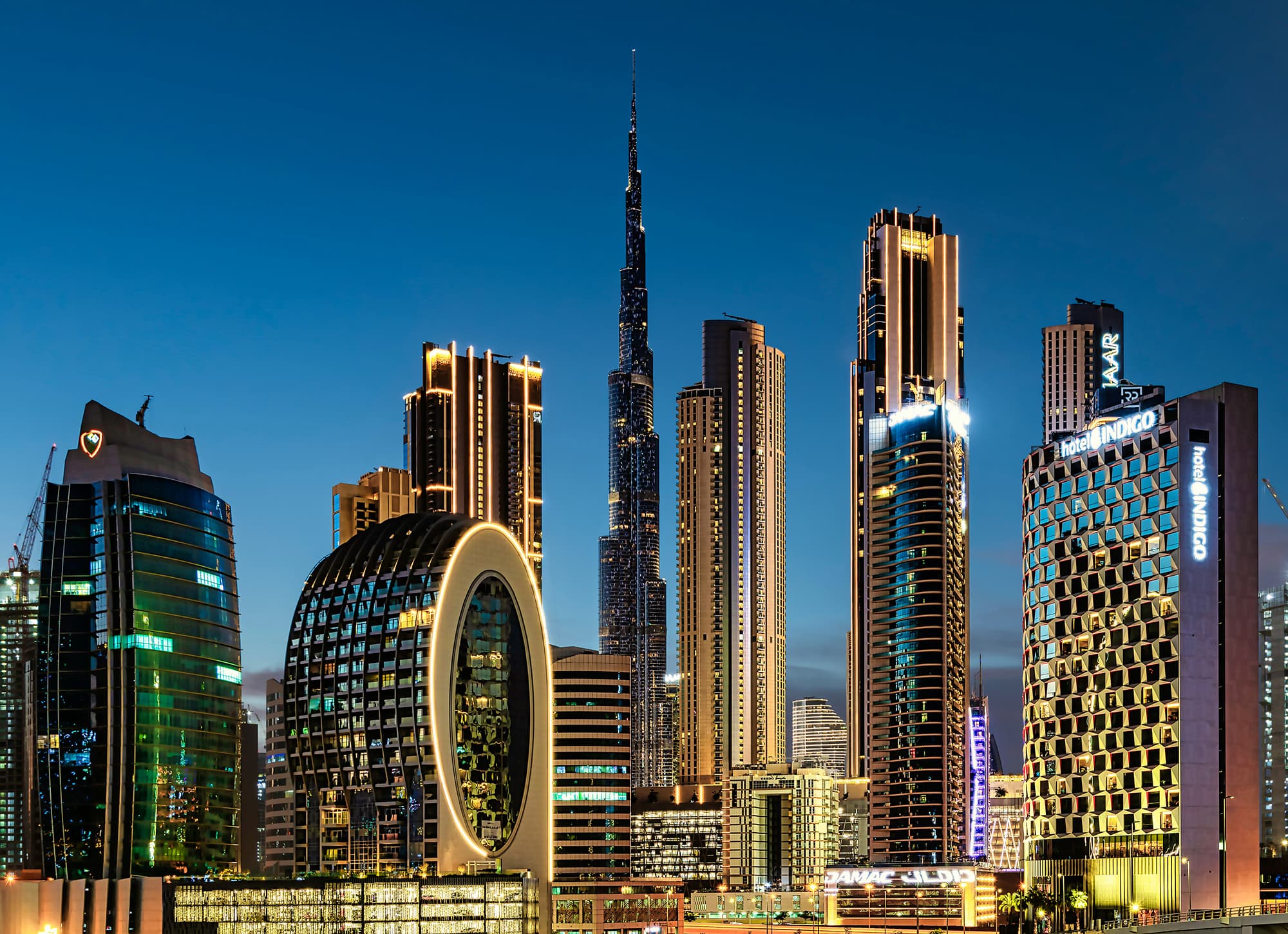
In Dubai, this ambition is being driven directly by the Roads and Transport Authority (RTA), which has incorporated AAM into its long-term vision for multimodal mobility. The partnership with Joby Aviation, formalised following a series of landmark agreements, calls for the gradual deployment of air taxis starting in the middle of the century. The initial network is set to connect major hubs such as Dubai International Airport, Palm Jumeirah, Dubai Marina, and Downtown.
The announced performance figures give a sense of the transformative potential: aircraft capable of reaching speeds of approximately 300 km/h, with urban trips reduced from 40 to 50 minutes to about ten minutes.
But what truly sets the Emirati model apart is the ecosystem built around these initiatives. The General Civil Aviation Authority (GCAA) is actively working to establish air corridors dedicated to eVTOLs and cargo drones, with the goal of integrating these new aircraft into controlled airspace alongside commercial aviation. This project, carried out in collaboration with technology partners and local institutions, aims to anticipate the increase in the volume of operations rather than react to it. This regulatory foresight is one of the key factors enabling a scale-up.
Major airports play a central role in this transformation. Dubai International Airport and Al Maktoum International Airport are set to become major hubs for AAM operations, with the gradual integration of vertiports near existing hubs. The goal is to create seamless transport chains, where a passenger or cargo can transfer from commercial aviation to a regional or urban air mode without any interruption in service.
Abu Dhabi complements this dynamic with a more industrial and strategic approach. Abu Dhabi International Airport is gradually positioning itself as a future hub integrating commercial aviation, logistics, and new forms of air mobility. Collaborations with infrastructure operators such as Skyports aim to develop networks of vertiports connected to airport platforms, in order to support both passenger transport operations and logistics flows.
This approach to airport integration is fundamentally transformative: the goal is not simply to have aircraft flying within cities, but to connect them to major international routes, leveraging existing infrastructure and well-established operations.
In this context, initiatives involving players such as VPorts have helped demonstrate how specialised infrastructure can be built around major hubs like Al Maktoum. The Quebec-based company has positioned itself in the development of vertiport networks and the structuring of AAM corridors connected to airport platforms, with a vision that integrates traffic management, control centers, and intermodality. This positioning illustrates a key element: in the AAM value chain, infrastructure and the orchestration of operations are just as strategic as aircraft manufacturing.
Alongside advanced air mobility, drone technology is already well established in the UAE. Drones are used in a variety of contexts, including the inspection of energy infrastructure, monitoring of construction sites, industrial asset management, urban security, and specialised logistics.
In a country characterised by major infrastructure projects and extensive industrial zones, these systems help reduce inspection costs, improve safety, and speed up operations.
Public and private companies are already using drones to monitor critical infrastructure, particularly in the energy, construction, and urban management sectors. Authorities are also exploring applications related to public safety and emergency management, thereby furthering the gradual integration of autonomous systems into day-to-day operations.
The region also relies on major international events to shape its ecosystem and attract industry players. The Dubai Airshow has become one of the world’s most important gatherings for the aerospace industry, bringing together leading manufacturers, operators, and investors to explore emerging technologies, including autonomous systems and eVTOLs. In Abu Dhabi, the IDEX (International Defence Exhibition) and NAVDEX (International Naval Defence Exhibition) play an equally strategic role. These events showcase drone technologies, unmanned systems, and advanced surveillance solutions, attracting delegations from all around the world.
Beyond their commercial significance, these trade shows help position the Emirates as a hub for international discussions on the future of aviation, defense, and autonomous systems. They facilitate partnerships, accelerate technology transfer, and enhance the region’s appeal.
Finally, Abu Dhabi has also invested in the development of industrial and technology hubs focused on autonomous systems, defense, and aerospace. These initiatives, led by public institutions and para-public entities, aim to foster an environment conducive to innovation, attract international companies, and build local capabilities.
All of these factors—strategic vision, regulatory integration, the role of airports, infrastructure development, the adoption of drones in real-world operations, and the mobilisation of resources for major international events—make the United Arab Emirates one of the world’s leading regions where advanced air mobility and drone technology are beginning to converge into a coherent operational system.
Saudi Arabia: the territorial level as a driver of adoption
Saudi Arabia is approaching drone technology and advanced aerial mobility with a strategy deeply rooted in the transformation of its territory and economy. As part of the Vision 2030 program, these technologies are seen as operational tools for modernising infrastructure, securing strategic assets, and supporting the development of new urban and industrial areas.
Drone technology is already being put to practical use there. Drones are deployed to inspect thousands of kilometers of pipelines, monitor oil and gas facilities, map construction sites, and track the progress of major infrastructure projects. In a country where industrial assets are scattered across vast desert regions, these systems help reduce inspection costs, improve operational safety, and enable faster response times in the event of an anomaly.
In particular, the energy giant Aramco has incorporated drones into its inspection and surveillance operations to monitor the condition of its facilities, detect anomalies, and optimise preventive maintenance. These industrial applications are now one of the main drivers of the drone industry’s growth in the country.
At the same time, advanced aerial mobility is part of urban transformation projects on an unprecedented scale. The NEOM project, designed as a new city that integrates autonomous systems from the outset, plans to use aerial solutions for the transport of goods and, eventually, passengers. In a vast territory still under construction and structured around new urban hubs, AAM is envisioned as a natural complement to ground-based infrastructure.
Saudi authorities are also working to build an industrial ecosystem around these technologies. The development of local capabilities in autonomous systems, defense, and aerospace is part of a broader effort to diversify the economy. Major events such as the World Defense Show serve as platforms to attract international manufacturers, showcase drone solutions, and strengthen technological partnerships.
In this model, the scale of the territory becomes a defining factor. The distances between urban centers, industrial sites, and energy infrastructure create immediate use cases for drones and, in the longer term, for advanced aerial mobility solutions. Saudi Arabia thus illustrates a trajectory in which the adoption of these technologies is initially driven by concrete industrial and logistical needs, before evolving toward broader urban and commercial applications.
Qatar: foundational institutional practices rooted in real-world scenarios
Qatar has adopted a pragmatic and incremental approach to the development of drone technology, starting with very specific applications related to security and the protection of critical infrastructure, before gradually expanding its focus to advanced aerial mobility. This approach, which is less visible than the urban demonstrations seen elsewhere in the region, has enabled the country to rapidly build robust operational capabilities.
The 2022 FIFA World Cup marked a turning point. In preparing for and managing the event, Qatari authorities integrated drone systems into the security infrastructure surrounding major venues such as Lusail Stadium, Al Bayt Stadium, and the major transportation corridors connecting the various facilities. The Ministry of Interior and security forces used these technologies to provide real-time aerial surveillance, monitor crowd flows, and strengthen protection of sensitive areas.
This large-scale deployment in a real-world setting and under intense operational pressure enabled the country to rapidly develop expertise and best practices. Following the event, these capabilities were not dismantled; instead, they were gradually integrated into routine surveillance and land management operations.
Industrial facilities associated with QatarEnergy provide another concrete example. In areas such as Ras Laffan and Mesaieed, which are among the world’s largest gas complexes, drones are used for infrastructure inspections, site surveillance, and monitoring specific facilities. In an environment where asset security is critical, these systems enable rapid coverage of large areas, limit human exposure, and improve responsiveness in the event of an anomaly.
Port infrastructure, particularly Hamad Port, also presents real-world use cases. The monitoring of maritime areas, terminals, and logistics facilities benefits from drones’ ability to provide flexible and rapid aerial surveillance. These technologies are gradually being integrated into management and security practices.
At the same time, the country is showing growing interest in applications related to advanced air mobility, particularly in logistics and urban contexts. Hamad International Airport, which has established itself as one of the world’s major air transport hubs, is being considered as a potential anchor point for the future integration of autonomous solutions. The idea is to integrate these technologies into existing flows, in conjunction with logistics and airport operations.
Qatar also actively participates in regional trade shows and forums focused on security, defense, and advanced technologies, such as DIMDEX (Doha International Maritime Defence Exhibition) and Milipol Qatar, where drone systems are playing an increasingly prominent role. These events facilitate interactions between government agencies, security forces, and international technology suppliers, helping to gradually build a national ecosystem.
In this journey, drone technology serves as a gateway. Drawing on concrete examples—such as surveillance of the Lusail and Al Bayt stadiums, inspection of QatarEnergy facilities in Ras Laffan, and monitoring of port areas around Hamad Port—the country is gradually developing the necessary skills, operational frameworks, and experience. Advanced aerial mobility could then build on this growing maturity, leveraging existing infrastructure and the experience gained in integrating autonomous systems.
Oman: a national strategy rooted in industrial and regional use cases
The Sultanate of Oman has adopted one of the most structured and economically grounded approaches to drone technology and, in the longer term, advanced aerial mobility. Rather than focusing on a series of technological demonstrations, the country has chosen to start with the concrete needs of its territory, gradually building a national framework around its industrial, energy, and logistics infrastructure.
The Ministry of Transport, Communications and Information Technology, in coordination with the Civil Aviation Authority, is working to develop an integrated national vision for the integration of drones and autonomous systems. This initiative covers airspace integration, regulation, corridor planning, and the development of local expertise, with the goal of creating a coherent operational environment before the widespread adoption of these technologies.
In the field, the use cases are very practical. In the energy sector, companies such as Petroleum Development Oman (PDO), which operates thousands of kilometers of pipelines and oil facilities in desert areas, use drones for infrastructure inspection, site monitoring, and tracking critical assets. In these remote environments, these systems make it possible to quickly cover large distances and reduce the risks associated with ground-based inspections.
Industrial and port areas represent another major area of application. In Duqm, where the Special Economic Zone and a major port and industrial complex are being developed, drones are being considered to support facility surveillance, monitor construction progress, and inspect infrastructure. Similar needs exist around the port of Sohar, where petrochemical and logistics facilities require regular inspection and monitoring operations.
The issue of regional connectivity also plays a key role. In certain mountainous or remote regions, authorities are exploring the use of drones to transport medical supplies, critical parts, or equipment toward hard-to-reach locations. These scenarios address real challenges in a country where some communities and industrial facilities are located several hours away from major urban centers.
Advanced air mobility is being considered from a longer-term perspective. Discussions are focusing, in particular, on the possibility of creating logistics corridors linking economic hubs such as Muscat, Sohar, and Duqm, in order to support industrial and logistics flows. The goal is not to replicate an urban model like Dubai’s, but to develop solutions tailored to the country’s geographical realities.
What sets Oman’s approach apart is its focus on specific needs: monitoring pipelines operated by PDO, inspecting infrastructure in the industrial zones of Sohar and Duqm, and logistics in remote regions. Drones are not presented as a futuristic innovation, but as an operational tool to improve the efficiency of existing operations.
By first structuring the drone industry around concrete industrial assets and potential logistics corridors, Oman is gradually laying the groundwork for an ecosystem capable of eventually supporting more advanced aerial mobility operations. This more methodical approach illustrates another path to adoption: building a sustainable system based on economic and territorial realities.
In Quebec: a robust ecosystem that is still taking shape
Given the developments unfolding in the Middle East, Quebec finds itself in a position that is both privileged and paradoxical. The province boasts one of the world’s most robust and integrated aerospace ecosystems, with an exceptional concentration of manufacturers, integrators, research centers, and talent. Montreal is regularly cited as one of the world’s major aerospace hubs, alongside Seattle and Toulouse. However, in the specific field of advanced air mobility and drone aviation, the development of a coordinated operating system is still in its early stages.
The region encompasses significant industrial capabilities. Companies such as CAE, Pratt & Whitney Canada, Bell Textron, Airbus Canada, and Thales, help maintain an exceptional level of expertise in aerospace engineering, simulation, and avionics systems. Added to this is a leading academic and technological ecosystem, with institutions such as Polytechnique Montréal, ÉTS, McGill, IVADO, and CRIM, which are working on artificial intelligence, autonomy, and the integration of complex systems.
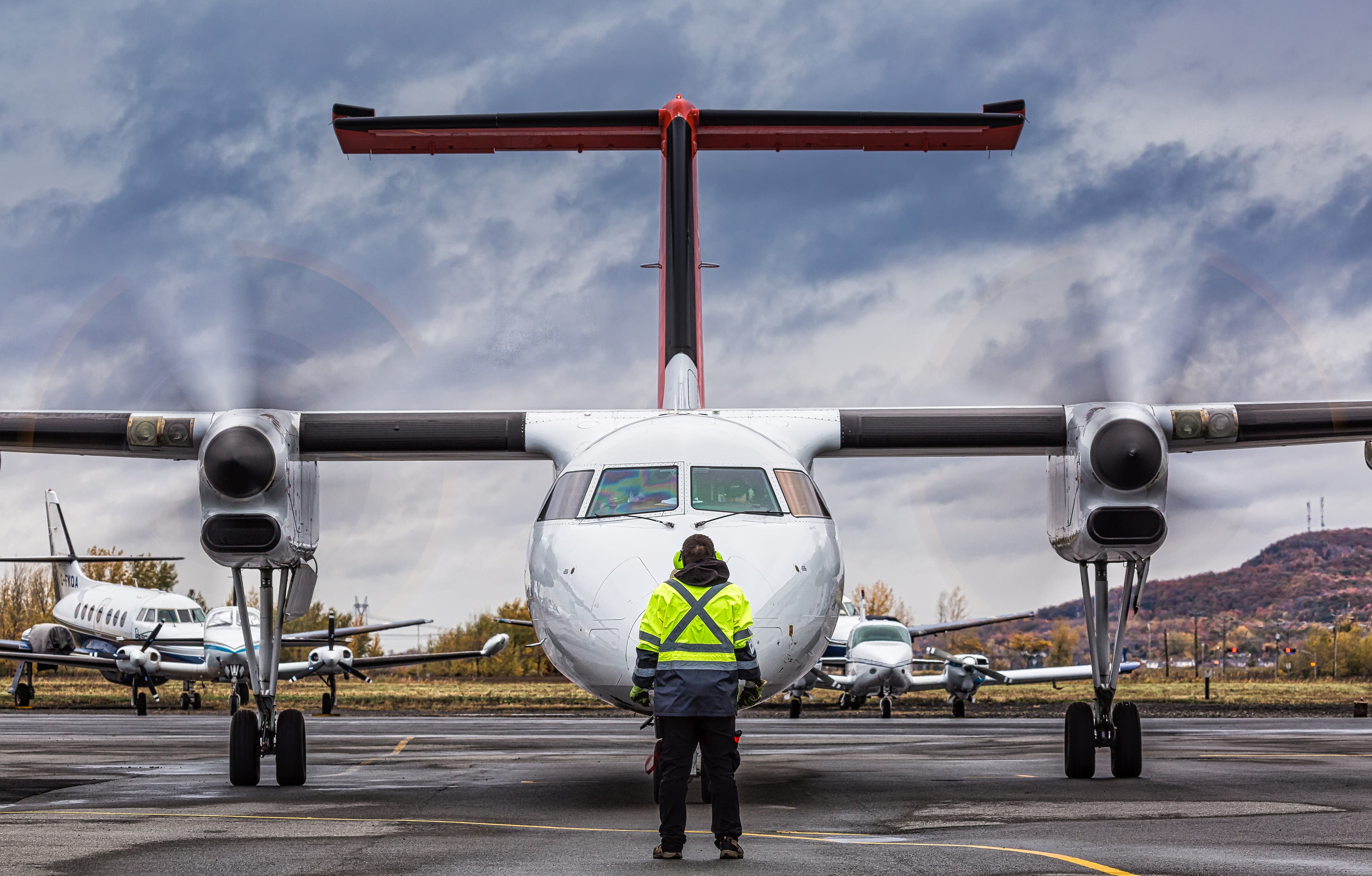
In the more specific field of drones, several use cases are already well established. Hydro-Québec uses drones to inspect thousands of kilometers of power transmission lines, particularly in remote areas. In the mining and forestry sectors, these technologies are used for mapping, site monitoring, and asset inspection. The Ministry of Transport and certain municipalities are also exploring the inspection of infrastructure such as bridges and roads using autonomous aerial systems. Dronautics is therefore already an operational reality in several key sectors.
In terms of infrastructure, Quebec possesses key assets that could play a decisive role in the gradual integration of advanced air mobility. Airports such as Mirabel, Montréal-Trudeau, and Saint-Hubert—at the heart of the metropolitan aerospace hub—provide natural environments for testing and deploying new modes of operation, directly linked to existing flows of passengers, cargo, and industrial activity.
With this in mind, the idea of improved air connectivity between these various hubs frequently comes up in discussions about the future of the metropolitan system. Although no specific model has yet been defined, we can envision, in the long term, key connections between these complementary hubs, which would allow for the integration of new forms of mobility to be tested in a real-world environment, close to major decision-making and industrial centers.
This approach is part of a global trend in which major airports are gradually becoming the hubs for the first AAM systems. Rather than being deployed immediately over urban centers, these new modes of transportation are taking shape around airport hubs, which already offer the infrastructure, safety frameworks, and operational capacity needed to support their integration.
Quebec also offers particularly favorable conditions for high-value use cases. Regional connectivity between major centres and remote communities in Northern Quebec or the North Shore, medical transport, the rapid delivery of equipment to mining or hydroelectric sites, and environmental monitoring are all scenarios where advanced air mobility could meet real needs.
Initiatives are already emerging on a smaller scale. Companies are testing drones for the delivery of materials in industrial settings, research centers are working on drone traffic management and integration into airspace, and pilot projects are emerging and focus on forest fire monitoring and the inspection of critical infrastructure.
However, unlike what is seen in some Gulf countries, these initiatives remain largely fragmented. They are often led by individual organisations—companies, research centers, or industry players—without always being part of a fully coordinated collective effort.
This is precisely where the strategic challenge lies. Quebec has almost all the necessary components: a strong industrial base, technological expertise, a favorable geographical location, major airports, infrastructure providers, and capabilities in artificial intelligence. What is still missing is a systemic coordination comparable to what is seen elsewhere: a shared vision, prioritisation of use cases, and coordinated infrastructure planning.
International experience shows that the next phase of development will not be solely technological, but also organisational. Quebec has the means to play a leading role in this transition, provided it moves from potential to genuine strategic coordination.
A Quebec forum on AAM and dronautics
It is against this backdrop that a Quebec forum dedicated to advanced air mobility and dronautics is being organised April 13 and 14, in conjunction with Aéro Montréal’s International Aerospace Forum. More than just an industry gathering, this initiative aims to create a space for collaboration among the stakeholders who will collectively shape the next phase: government agencies, regulatory authorities, airports, manufacturers, research centers, local governments, and infrastructure developers.
The goal is not so much to showcase technologies as it is to initiate a structured discussion on operational conditions. Which use cases should be prioritised in Quebec—regional connectivity, medical transport, industrial logistics, or the inspection of energy or forestry infrastructure? What role should platforms like Mirabel play in hosting the first operations? How should test corridors—and, eventually, operational corridors—be structured? And above all, how can efforts be better coordinated among public entities, industry, and local governments?
In regions such as the United Arab Emirates and Oman, it is precisely this kind of alignment that has made it possible to transform scattered initiatives into coherent systems by developing infrastructure, regulations, use cases, and operations in tandem. The forum follows this same approach: creating a common language, bringing stakeholders together, and initiating a more structured coordination of the ecosystem.
Through this initiative, Quebec is beginning to take an important step forward. It is no longer simply a matter of developing technologies or launching more pilot projects, but rather collectively considering how to scale up these efforts by establishing a shared vision and strengthening coordination among the stakeholders who will be responsible for driving this transformation.
A quiet reshaping of the global value chain
Major industrial transformations rarely occur in a single location or under the leadership of a single actor. Rather, they emerge where vision, coordination, and the ability to translate intentions into concrete operational frameworks converge. It is within this space—often unassuming yet decisive—that the balance of power is reshaped.
Advanced air mobility is now entering this pivotal phase. After years dominated by research, prototypes, and technological promises, the focus is shifting to the ability to organise real-world operational environments: structuring airspace, integrating infrastructure, defining operational models, and coordinating public and private stakeholders.
In this transition, value no longer lies solely in the design of devices, but in how systems are deployed, regulated, and integrated into local communities. The regions that succeed will be those that have created conditions conducive to large-scale deployment, taking on the role of architect rather than mere user.
Quebec has many tools at its disposal to play a significant role in this new phase. The question is not so much one of capability as it is one of positioning: do we want to help shape the framework within which this industry will evolve, or simply adopt models designed elsewhere?