Digital transformation appears to be the obvious answer to this challenge. Companies are heavily investing in cutting-edge technologies, convinced that they hold the key to their future competitiveness. Yet a troubling paradox persists: despite global investments exceeding $3.9 billion by 2027, nearly 70% of digital transformation initiatives fail to meet their objectives. Some recent studies, notably Bain’s 2024 report, even suggest that this failure rate could reach 88% when measuring the achievement of initial goals.
This alarming finding raises a fundamental question: why do so many companies, despite their good intentions and considerable resources, fail to deliver on the promise of digital transformation? And, more importantly, how can Quebec’s aerospace industry avoid these pitfalls to take full advantage of the opportunities offered by new technologies?
It was precisely to address these questions that the LIA – Living Lab for Innovation in Aerospace was established within the MET – Montréal Metropolitan Airport. This unique initiative offers a new approach to innovation, based on collaboration, real-world experimentation, and a promising technological philosophy: hyper-automation.
When technology outpaces strategy: a problem
An analysis of digital transformation failures reveals a recurring pattern: organisations that fail often share the same fundamental mistake. They place technology at the center of their approach rather than the business problems they are trying to solve.
According to research by McKinsey and the Boston Consulting Group, the main causes of failure are not technological, but organisational and human. A lack of strategic alignment, resistance to change, the absence of structured change management, and poor prioritisation of key roles consistently rank among the key factors.
This phenomenon stems from a common confusion between digitisation, and digital transformation. Digitisation involves converting existing processes into digital format. Digital transformation, on the other hand, entails a fundamental rethinking of how things are done, business models, and value creation. Too many companies simply digitise inefficient processes, thereby replicating their problems in the digital realm.
The specific challenges facing the aviation industry
The aerospace industry has characteristics that exacerbate these challenges. Strict regulatory compliance, extensive documentation, the need for absolute precision, and the coordination of complex global supply chains create an environment where even the smallest error can have significant consequences.
Current order books illustrate the pressure that the industry is facing: Airbus and Boeing have a combined order book of approximately 16,000 aircraft, equivalent to more than thirteen years of production.
However, deliveries are struggling to keep pace with demand, falling by 12% year-over-year despite a 9% increase in orders. This tension between growing demand and production capacity underscores the urgency of improving productivity.
The shortage of skilled labor is another major challenge. The technical skills required in the aerospace industry take years of training and experience to develop. Recruiting and retaining such talent is becoming increasingly difficult, making it all the more crucial to maximise the value added within every hour these specialists work.
A pioneering perspective on innovation
Announced in July 2024 at the prestigious Farnborough International Airshow, the LIA – Living Lab for Innovation in Aerospace embodies a new vision for innovation in the aerospace sector. This initiative by the MET – Montréal Metropolitan Airport aims to provide stakeholders within the innovation ecosystem with privileged access to all airport infrastructure and operations to conduct research and experimental projects in a real-world setting.
The concept of a Living Lab, used internationally, refers to a real-world environment available to research, where participants move beyond status of object of study to become active contributors.
Unlike traditional laboratories, which must artificially replicate real-world conditions, the LIA enables research to be conducted within the context of an airport’s daily operations, offering an invaluable opportunity to analyse actual practices and conduct real-world testing.
Le terrain de plus de 500 hectares du MET, ses infrastructures complexes et son nouveau terminal, avec une capacité de quatre millions de passagers par année, offrent un environnement d’expérimentation unique. Les chercheurs et les entreprises innovantes disposent d’espaces de bureaux, d’espaces de travail et d’un accès privilégié aux opérations aéroportuaires quotidiennes.
A collaborative ecosystem of excellence
Under the scientific leadership of UQAM Professor Mehran Ebrahimi, a recognised expert in aerospace business management, the LIA brings together an impressive ecosystem of partners. Founding members include École de technologie supérieure (ÉTS), Université de Montréal, Université de Sherbrooke, the Centre technologique en aérospatiale (CTA), Aéro Montréal, the CRIAQ, Bombardier, Air France-KLM, and the Bordeaux Institute of Technology.
This collaboration fits perfectly within the framework of Espace Aéro, the Quebec Aerospace Innovation Zone, of which Longueuil is one of three hubs alongside Mirabel and Saint-Laurent. Espace Aéro’s two priority areas—decarbonisation and autonomy—guide the LIA’s research.
A new approach: defining before solving
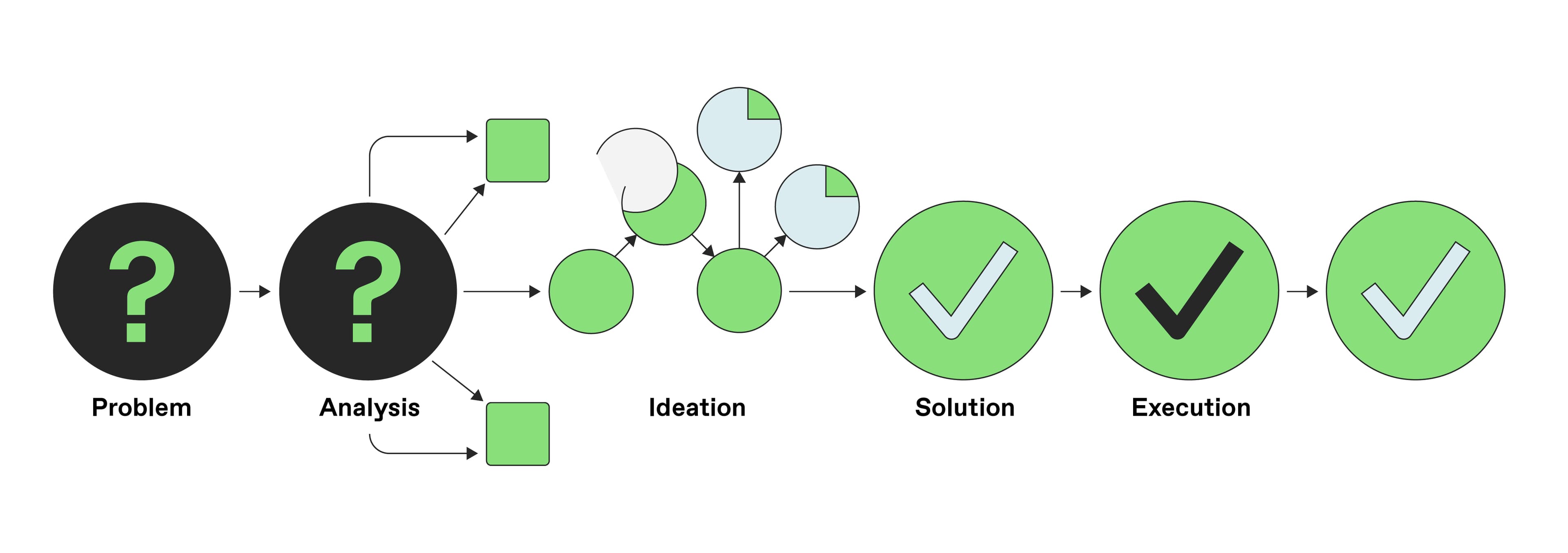
“A problem well-stated is a problem half-solved.” This maxim, often attributed to Charles Kettering, the inventor of the automotive starter motor, sums up the philosophy that guides the LIA’s approach to digital transformation. Before seeking technological solutions, we must first gain a deep understanding of the real problems we are trying to solve.
This approach contrasts with the usual practice in which companies, enticed by the promises of a new technology, then look for ways to apply it within their organisation. The result is often a proliferation of poorly integrated digital tools, pilot projects that never make the cut, and investments that fail to deliver the expected returns.
Instead, the LIA offers a structured approach that begins with collaborative workshops bringing together key stakeholders: operators, managers, engineers, and experts. These sessions make it possible to map existing processes, identify bottlenecks, understand day-to-day pain points, and quantify the impacts on performance. Only after this in-depth diagnostic phase are appropriate technological solutions considered.
The role of academics as champions of definition
Academics play a crucial role in this approach. Their methodological expertise and their distance from day-to-day operations enable them to ask the right questions, challenge implicit assumptions, and structure the analysis of problems in a rigorous manner.
This collaboration between the industry and academia is one of the cornerstones of the LIA. Companies benefit from fresh perspectives and proven methodologies, while researchers gain access to real-world testing grounds that enrich their work. Students, for their part, develop their skills in an authentic setting that prepares them for the challenges of their future careers.
ÉTS, for example, is renowned for its expertise in digital transformation with its NUMÉRIX laboratory and dedicated training programs. Its researchers assist companies in identifying value-added projects, developing tailored methodologies, and measuring the results achieved.
Hyperautomation: beyond traditional automation
Among the technologies promoted by the LIA, hyperautomation plays a central role. Defined by Gartner as “a disciplined, business-driven approach that organisations use to rapidly identify, evaluate, and automate as many business and IT processes as possible,” hyperautomation represents much more than a simple evolution of traditional automation.
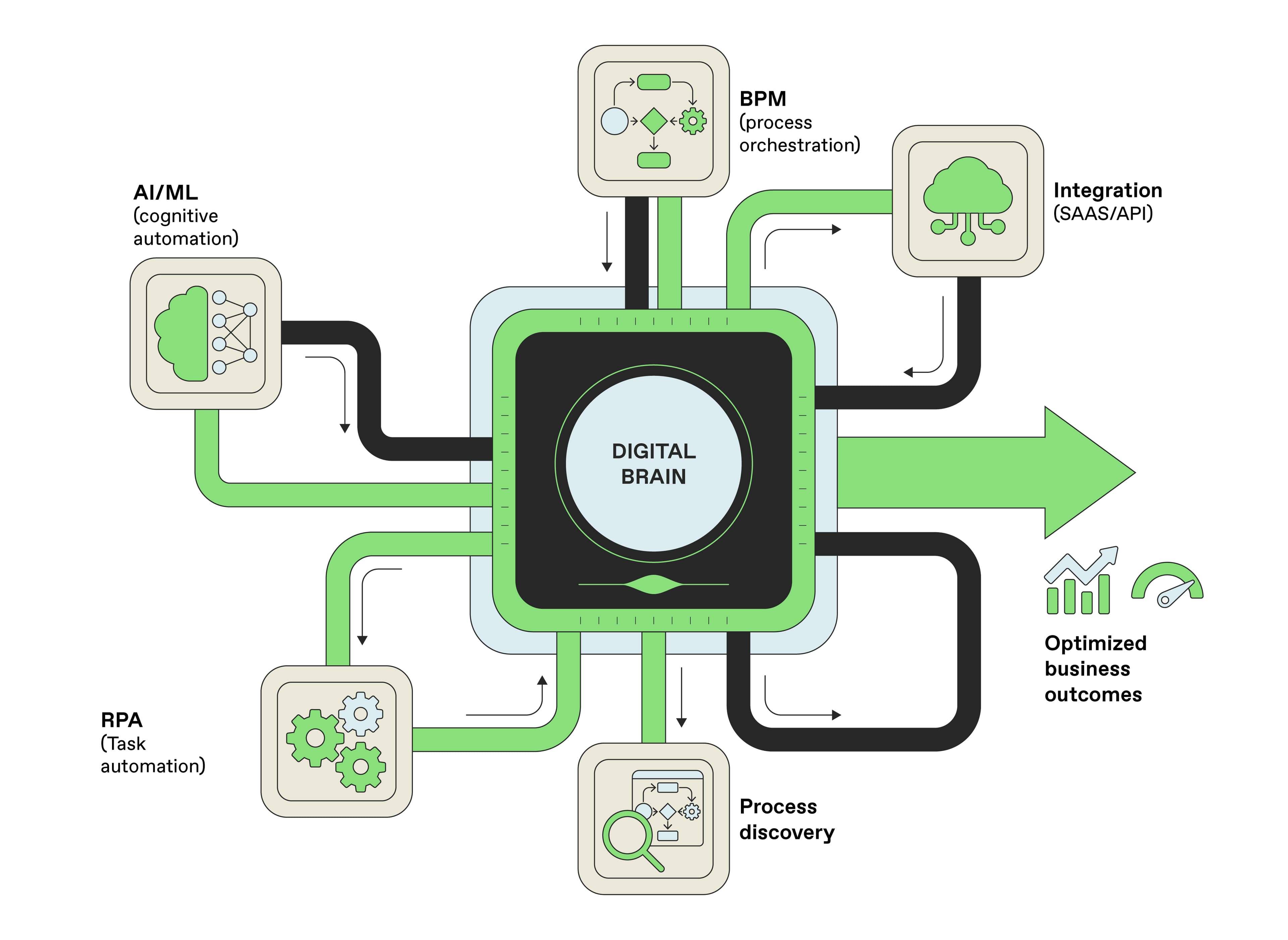
Unlike traditional robotic process automation (RPA), which is limited to repetitive tasks based on strict rules and perfectly structured data, hyperautomation orchestrates a suite of complementary technologies. It combines artificial intelligence, machine learning, natural language processing, intelligent document recognition, low-code and no-code platforms, and business process management systems.
This orchestration makes it possible to automate processes that were previously considered too complex or too variable to automate. Modern digital agents can interpret ambiguous data, make simple decisions in uncertain contexts, and collaborate with one another to accomplish complex tasks.
The rise of the digital workforce
The latest generation of AI models is profoundly changing the very nature of digital transformation. Previously, automation mainly involved physical movements, repetitive sequences, and structured calculations. Today, the tools available can understand text, reason about complex information, and act in situations that require significant cognitive effort.
This development has given rise to what might be called a “digital workforce”: software agents that process information with speed and consistency that exceed human capabilities. These agents operate in the space between systems―handling the verifications, data entries, checks, and workflows that traditionally slowed down operations.
The market reflects this growing importance: Gartner predicts that the hyperautomation software market will reach nearly $1.04 billion by 2026, with a compound annual growth rate of 11.9%. More than 80% of large organisations will include hyperautomation in their short-term technology roadmap.
The power of compound interest in hyperautomation
One of the key strengths of the agile hyperautomation approach lies in its principle of incremental benefit accumulation, which is comparable to the effect of compound interest in finance. Rather than aiming for massive transformations that take years to materialise and involve high risks, this approach focuses on smaller projects that deliver quick results.
The principle is simple yet powerful: every successful project frees up resources—time, money, capacity—that can be reinvested in the next project. The savings generated by the first round of automation fund the second, whose benefits fund the third, and so on. Just as compound interest causes capital to grow exponentially, the gains from hyper-automation accumulate and multiply over time.
This virtuous cycle creates a snowball effect. Early wins, even modest ones, demonstrate the value of the approach and generate the enthusiasm needed to rally teams. It creates internal champions who become ambassadors for transformation within the organisation. And they produce tangible results that justify further investments by the management.
Two drivers of productivity
Hyperautomation drives productivity through two complementary levers. The first, and most obvious, is cost reduction. By automating repetitive and administrative tasks, organisations reduce the time and resources required for their operations. Studies suggest that operational costs can be reduced by 30 to 40 percent for automated functions. But it is the second lever that holds the most transformative potential: scaling up capabilities.
By freeing experts from low-value-added tasks, hyperautomation allows them to focus on what truly makes a difference—innovation, solving complex problems, process improvement, and customer relations. This increased capacity directly translates into a greater ability to generate revenue and seize new opportunities.
Gartner predicts that organisations that combine hyperautomation technologies with redesigned operational processes will reduce their operating costs by 30%. This combination—technology and process redesign—is the key to a successful transformation.
Practical applications in the aerospace industry
The aviation industry is characterised by a vast amount of documentation: certificates, test reports, technical files, configuration updates, and maintenance records. While this documentation is necessary for compliance and quality, it takes up a considerable amount of time for qualified teams.
Digital agents are transforming this reality. They can read documents, verify data, identify inconsistencies, automatically categorise information, prepare summaries, and trigger next steps in processes. What used to take hours of repetitive work can now be handled continuously, freeing up specialists for higher-value tasks.
Regulatory compliance, a critical aspect of the industry, benefits significantly from this automation. Verification processes can be carried out in a systematic and traceable manner, reducing the risk of errors while automatically generating the documentation required for audits.
Optimising Production and Maintenance
In production, digital agents monitor machine status, interpret alerts, consolidate information from various systems, and suggest corrective actions. They facilitate coordination between production, quality, and maintenance—an area where failures can lead to costly delays.
In warehouses and on assembly lines, this ability to link disparate data and maintain an operational thread proves particularly valuable. Agents ensure information continuity, allowing human teams to focus on their technical expertise.
Aircraft maintenance is another key area of application. Technicians analyse maintenance records, identify recurring patterns, prepare pre-maintenance reports, and track discrepancies between the aircraft’s theoretical and actual configurations. Combined with digital twins, these tools enable teams to anticipate issues before they become operational.
The entire value chain
Hyperautomation extends across the entire value chain: supplier management, non-conformance handling, batch tracking, inspection documentation, audit preparation, and mandatory training management. Each of these areas involves an administrative burden that, without automation, slows down operations and ties up skilled resources in routine tasks.
A proven methodology for success
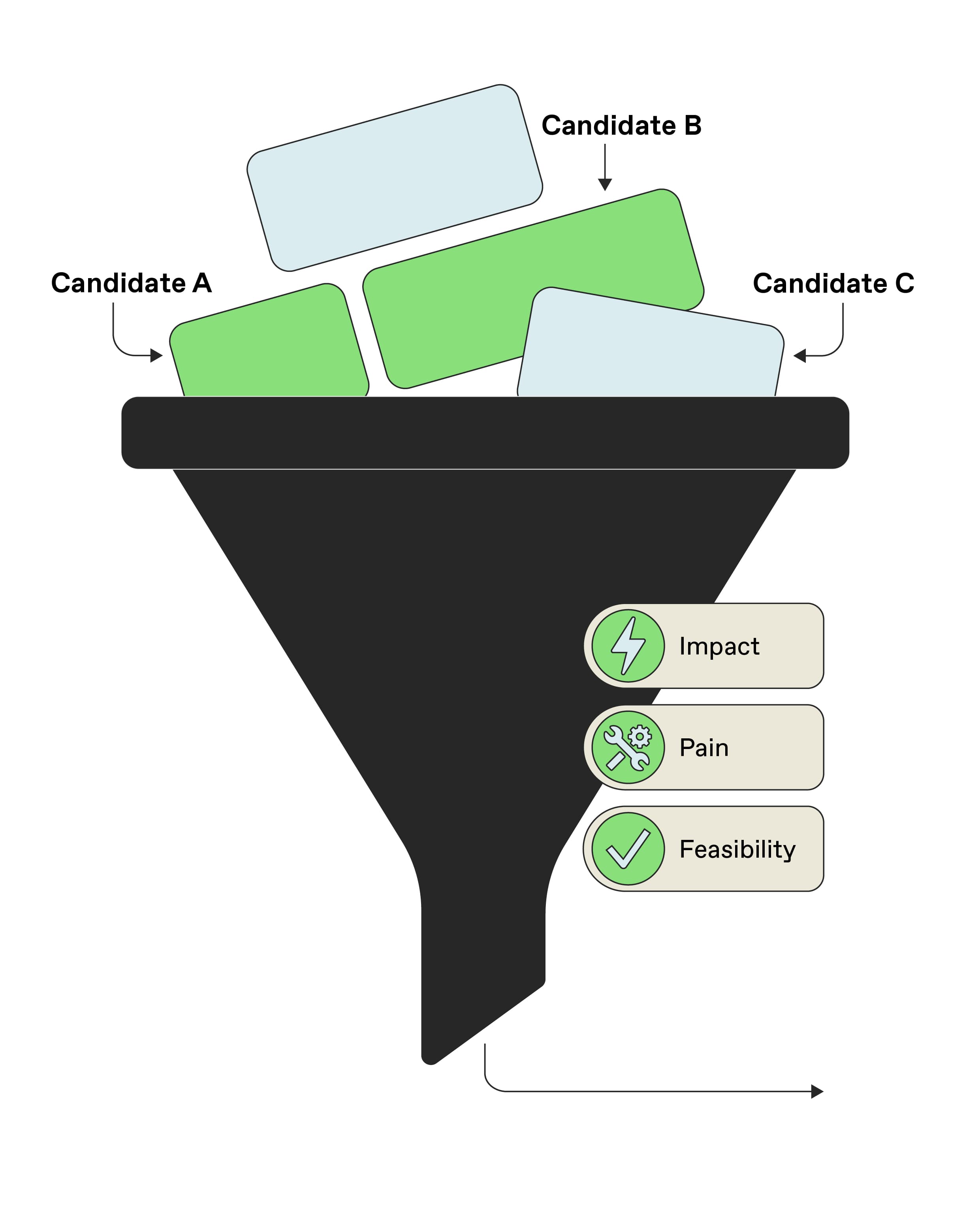
Given the wide range of processes that can potentially be automated, companies need a structured approach to prioritise their efforts and maximise their return on investment. This is precisely what the protocol developed as part of the research conducted with the LIA offers.
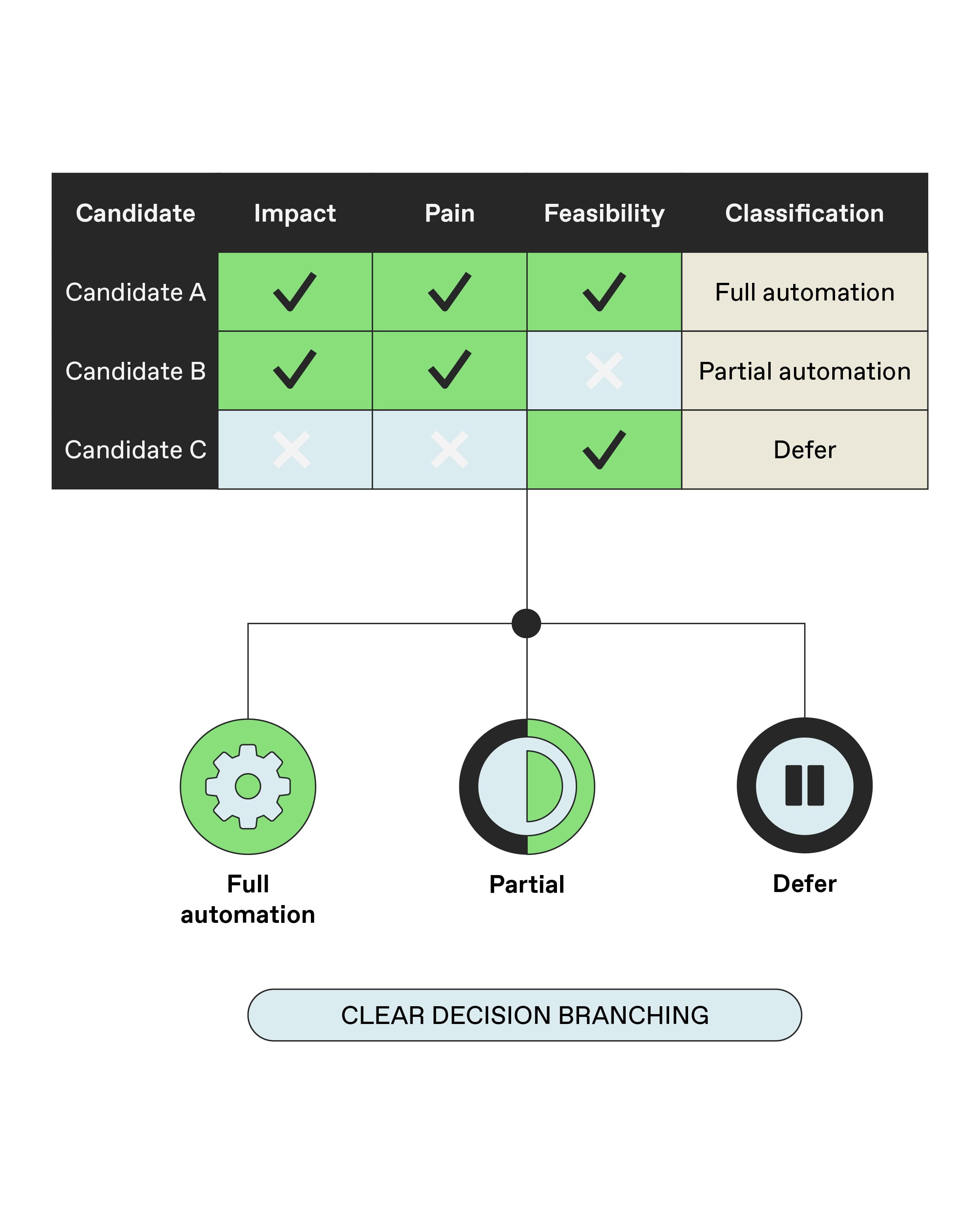
This protocol is implemented through two complementary phases. The first phase aims to identify and rank candidate processes based on their potential. It evaluates each process along three dimensions: strategic impact (what value does this process bring to the organisation?), operational pain (to what extent is it currently causing problems?), and initial feasibility (how easy is it to automate?).
This approach is based on Eliyahu Goldratt’s theory of constraints, which holds that a system’s overall performance is limited by its weakest link. It thus avoids the common pitfall of automating the easiest processes rather than those that will add the most value.
Assessing readiness
The second phase uses a rigorous multi-criteria method to assess whether the priority process is ready for full or partial automation, or if it requires preparatory work. Six criteria are examined: organisational readiness, process standardisation, data quality, value potential, technical complexity, and compliance issues.
Based on the results, the process is classified into one of three categories. Full automation (end-to-end) is recommended when all prerequisites are met. Partial automation is recommended when some steps are ready, but others require preparatory work. Postponement is recommended when fundamental prerequisites are not met.
This methodical approach prevents premature investments in processes that are not yet ready for automation, while clearly identifying the steps needed to move forward. It also provides thorough documentation that justifies decisions to stakeholders.
Expertise at the service of the industry
The success of digital transformation depends on the ability to combine academic rigor with industrial pragmatism. It is this combination that is embodied by the collaboration between ÉTS and specialised companies such as NeoBotiQc within the LIA.
NeoBotiQc, founded by researchers and professionals from ÉTS, embodies this hybrid approach. Its mission is to make hyperautomation accessible by providing organisations with intelligent, adaptive, and scalable solutions. By combining industrial engineering, artificial intelligence, and operational excellence, it helps companies overcome technological barriers, boost productivity, and establish sustainable practices.
The doctoral research conducted in partnership with NeoBotiQc aims to develop a comprehensive operational framework for consulting and implementing hyperautomation solutions. This framework includes methods, protocols, models, templates, and evaluation criteria that enable projects to be carried out consistently, and their results to be measured.
A vision for the future
The ambition of the LIA and its partners goes beyond simply optimising existing processes. The goal is to help shape the future of Quebec’s aerospace industry by developing the skills, methodologies, and technologies that will enable it to maintain its position as a global leader.
This vision addresses the major challenges facing the sector: decarbonisation, self-sufficiency, supply chain resilience, and talent acquisition. Hyperautomation, by unlocking human potential and increasing organisational agility, is a key driver for overcoming these challenges.
The LIA aims to become a hub for research, as well as a space dedicated to experimentation and innovation within the aerospace industry. By building and fostering a multidisciplinary community of practice focused on airport innovation, it seeks to share knowledge and make the expertise of industry leaders globally accessible.
Transforming the Transformation
Quebec’s aerospace industry has everything it needs to successfully navigate its digital transformation: a pool of exceptional talent, a dynamic innovation ecosystem, world-class research infrastructure, and a tradition of internationally recognised excellence.
What has been missing until now is an approach that avoids the pitfalls that have caused so many initiatives elsewhere to fail.
The LIA and its partners propose this approach: one that prioritises understanding problems over finding solutions, that favors rapid and cumulative gains rather than risky, sweeping transformations, and that leverages hyperautomation to amplify human capabilities rather than simply replace them.
The effect of compound interest, when applied to agile hyperautomation, offers a promising path for companies seeking to improve their productivity in a sustainable way. Each successful project builds on the next, creating a virtuous cycle that gradually transforms the entire organisation.
The aerospace industry, with its high standards for quality, compliance, and coordination, is a particularly suitable field for this approach. The potential benefits—in terms of productivity, competitiveness, and innovation—more than justify the investment in this transformation.
For companies that are still on the fence, the message is clear: now is the time to act. Not by rushing headlong into ambitious tech projects, but by adopting a structured approach, leveraging available expertise, and methodically building—project by project—the digital capabilities that will make a difference.
The LIA is here to support them in this process. Together, let’s transform the transformation.